
Gunite vs. Fiberglass vs. Vinyl Liner Pools: Which Is Best in Arkansas?
There’s no single best pool for Arkansas. Gunite is the most custom and longest-lasting but costs the most to build and maintain. Fiberglass costs the least to maintain and installs fastest, with limited shapes. Vinyl liner costs least up front but needs a new liner about every 10 years. Your yard, budget and patience for upkeep decide.
Quick answer
Choose gunite for a one-of-a-kind shape, size or features, and plan for resurfacing every 10–15 years.
Choose fiberglass for the lowest upkeep and the quickest install, if a factory shape fits your yard.
Choose vinyl liner for a full-size pool on the tightest up-front budget, knowing the liner is a recurring cost.
Short on space? A plunge pool may beat all three.
In Arkansas heat and humidity, a smoother, less porous surface makes algae easier to stay ahead of.
How do gunite, fiberglass and vinyl liner pools compare?
Here are the three side by side. Cost, maintenance and build-time figures are national published ranges from Angi and HomeGuide, not Sunrise Pools quotes.
| Gunite (concrete) | Fiberglass | Vinyl liner | |
|---|---|---|---|
| Installed cost (HomeGuide, 2025) | $50,000–$120,000 | $45,000–$100,000 | $35,000–$80,000 |
| Yearly maintenance (Angi, 2026) | $2,700–$4,000 | $500–$1,500 | $1,100–$1,700 |
| Build time | Longest: the shell cures 30+ days (Angi); 6–8 weeks of construction (HomeGuide) | Fastest: the shell is set in 1–2 days after excavation (Angi) | About 2–3 weeks (HomeGuide; Angi says about 2 weeks after excavation) |
| Lifespan (HomeGuide) | 50+ years, resurfaced every 10–15 years | 25+ years | 20+ years; new liner every 6–12 years |
| Customization | Any shape, depth, bench or ledge | Limited to factory molds and what can be trucked in | Many shapes and patterns; liner made to fit |
| Surface feel | Plaster is textured and can feel rough | Smooth gelcoat | Smooth and soft, but can tear or puncture |
| Big future cost | Resurfacing: $6,000–$15,000 (Angi) | Usually none planned | Liner: $3,000–$7,500 (HomeGuide) |
Why does Arkansas weather matter when choosing a pool?
Central Arkansas summers are long, hot and humid, and warm water is exactly what algae likes. Chlorine gets used up faster in the heat, and summer storms wash in debris and throw off the chemistry. (We covered that in why pools turn green in Arkansas summers.) That makes surface choice more than a looks decision:
Gunite. Plaster is porous, so algae has more places to grip. HomeGuide notes concrete pools need the most chemicals of the three and an acid wash every 3 to 5 years. Steady weekly brushing and balanced water are what keep a plaster finish looking good.
Fiberglass. HomeGuide describes fiberglass as algae-resistant, and it carries the lowest yearly maintenance and chemical estimates of the three. It’s the easiest surface to keep clear through a humid July.
Vinyl liner. Also smooth, but the liner can tear, and sun and water chemistry wear it over time. Keeping the water balanced helps the liner last longer.
Winters are a smaller factor here than up north. Little Rock gets hard freezes, but they’re usually short, so cold-weather damage to the pool shell is a lesser concern than in colder states. Equipment and plumbing still need freeze protection, whatever pool you choose. Soil matters more: much of the area has clay soil that swells and shrinks with rain and drought, and slopes are common in West Little Rock and Chenal. Good excavation, backfill, drainage and decking matter for every type, and that’s something Sean looks at on the site visit.
Which pool type is right for you?
Pick the pool that fits how you’ll actually use it, and how much upkeep you want to take on.
Gunite fits homeowners who want a pool designed around the yard, such as a freeform shape, a tanning ledge, a deep end or built-in features, and who plan to stay put long enough to make the most of it. On custom gunite builds, Sunrise quotes usually include about four feet of concrete deck around the pool.
Fiberglass fits busy families who want to swim sooner and spend less time and money on upkeep, and who can find a shape and size they like among the factory molds. The shell has to be delivered by truck, so access matters.
Vinyl liner fits families who want a full-size pool for the lowest up-front cost and are fine budgeting for a new liner down the road. When that time comes, liner replacement is work we do too; see pool remodels and upgrades.
Where do plunge pools fit?
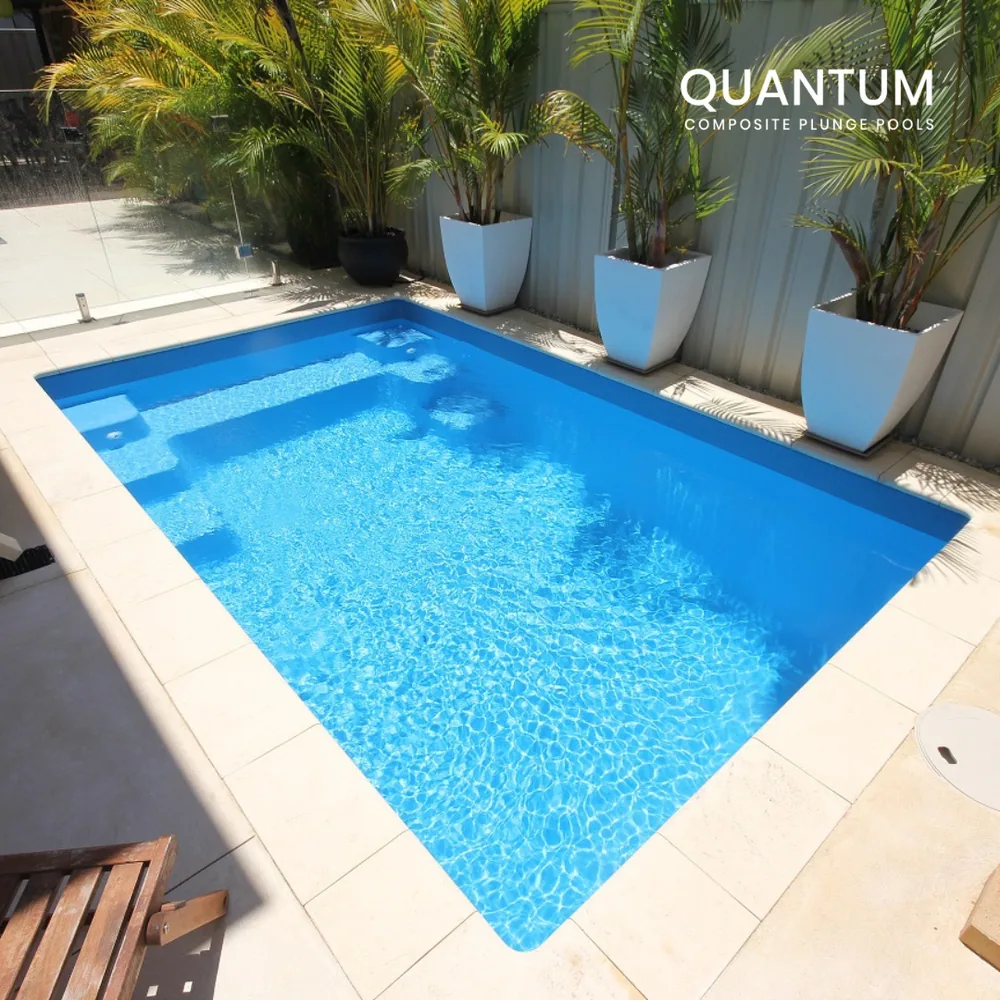
A plunge pool is a small pool for cooling off, soaking and relaxing rather than swimming laps. HomeGuide’s 2025 guide puts most plunge pools at $15,000 to $40,000 installed. They’re made off-site, so like fiberglass they go in faster than a gunite pool, and they can often be set by crane over a house or fence into a yard an excavator can’t reach.
That makes them a strong fit for tight lots in neighborhoods like the Heights, Hillcrest and Cammack Village. Sunrise Pools is an authorized plunge pool dealer. Compare the options in plunge pools vs. traditional pools or see our plunge pools page.
What else should you weigh besides the pool itself?
The shell is only part of the decision. A few things that affect every pool type:
Equipment. A variable-speed pump uses far less electricity than a single-speed pump; Angi’s 2026 figures put them at $10–$50 versus $40–$150 a month.
Decking and shade. Arkansas sun makes the deck hot. Material, color and shade from trees or a pergola change how comfortable the pool area feels in August, and trees also mean more leaves to clean out.
Who will maintain it. If you plan to hire weekly service, the gap in upkeep between pool types matters less than if you’ll be brushing and testing it yourself. See weekly pool maintenance.
How Sunrise Pools helps you choose
Sunrise Pools builds all four types, gunite, fiberglass, vinyl liner and plunge pools, so the recommendation fits your yard, not a single product line. Sean visits the property before quoting a new build, looks at access, slope, drainage and utilities, and tells you plainly which options make sense. Want rough numbers first? Read how much an inground pool costs in Little Rock, then see our pool builder page or contact us to set up a visit.
Frequently asked questions
Which pool type lasts the longest?
Gunite (concrete). HomeGuide says concrete pools last 50 years or more, though the plaster needs resurfacing every 10 to 15 years. Fiberglass pools last 25 years or more, and vinyl liner pools need a new liner every 6 to 12 years.
Which pool is easiest to maintain in Arkansas?
Fiberglass. Its smooth gelcoat resists algae, which helps in Arkansas heat and humidity, and Angi’s 2026 data puts its yearly maintenance at $500 to $1,500, the lowest of the three.
Is a gunite pool worth the extra cost?
It can be if you want a custom shape, depth or features, or a pool that fits an unusual yard, and you plan to stay in the home. If a standard shape works for you, fiberglass usually costs less to build and to own.
Do vinyl liner pools work in Arkansas?
Yes. They’re the lowest-cost way to get a full-size pool. Plan on a new liner every decade or so, keep the water balanced so the liner lasts, and watch for tears from sharp objects or pets.
Which pool type installs fastest?
Fiberglass and plunge pools, because the shell is made in a factory. Angi says a fiberglass shell can be set in one to two days after excavation, while gunite needs 30 days or more just to cure. Permits, weather and decking still add time to every project.
Sources
Planning a pool project in Little Rock? Get a quote or call 501.246.6789.